How OTG Benefits Sportsmen and Sportswomen
Are you a hunter, trapper or angler in Michigan? If so, then be sure to thank an On the Ground (OTG) volunteer for the time and hard work they have dedicated to ensuring your favorite game species or sportfish has the quality habitat it needs to thrive.

Photo by Morgan Warda, Wildlife Cooperative Coordinator
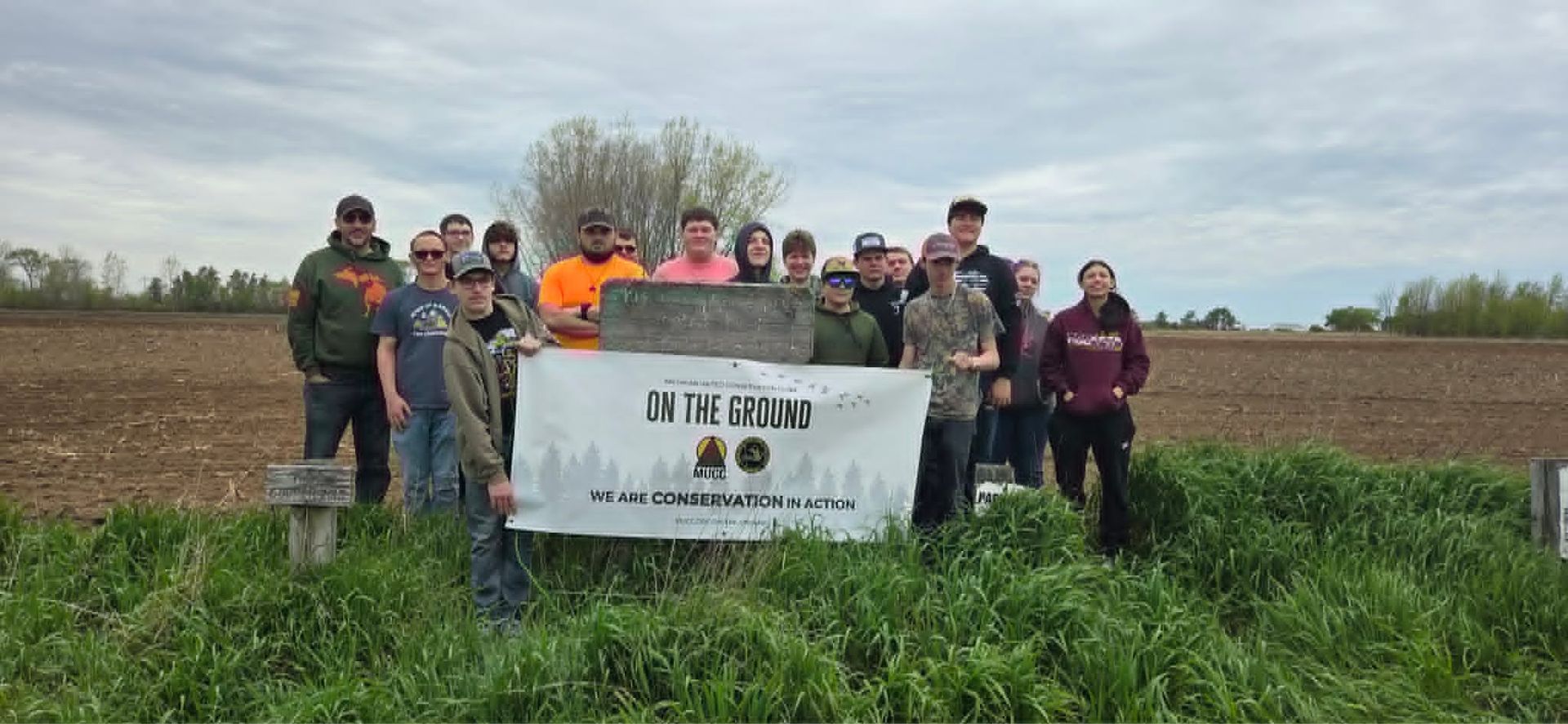
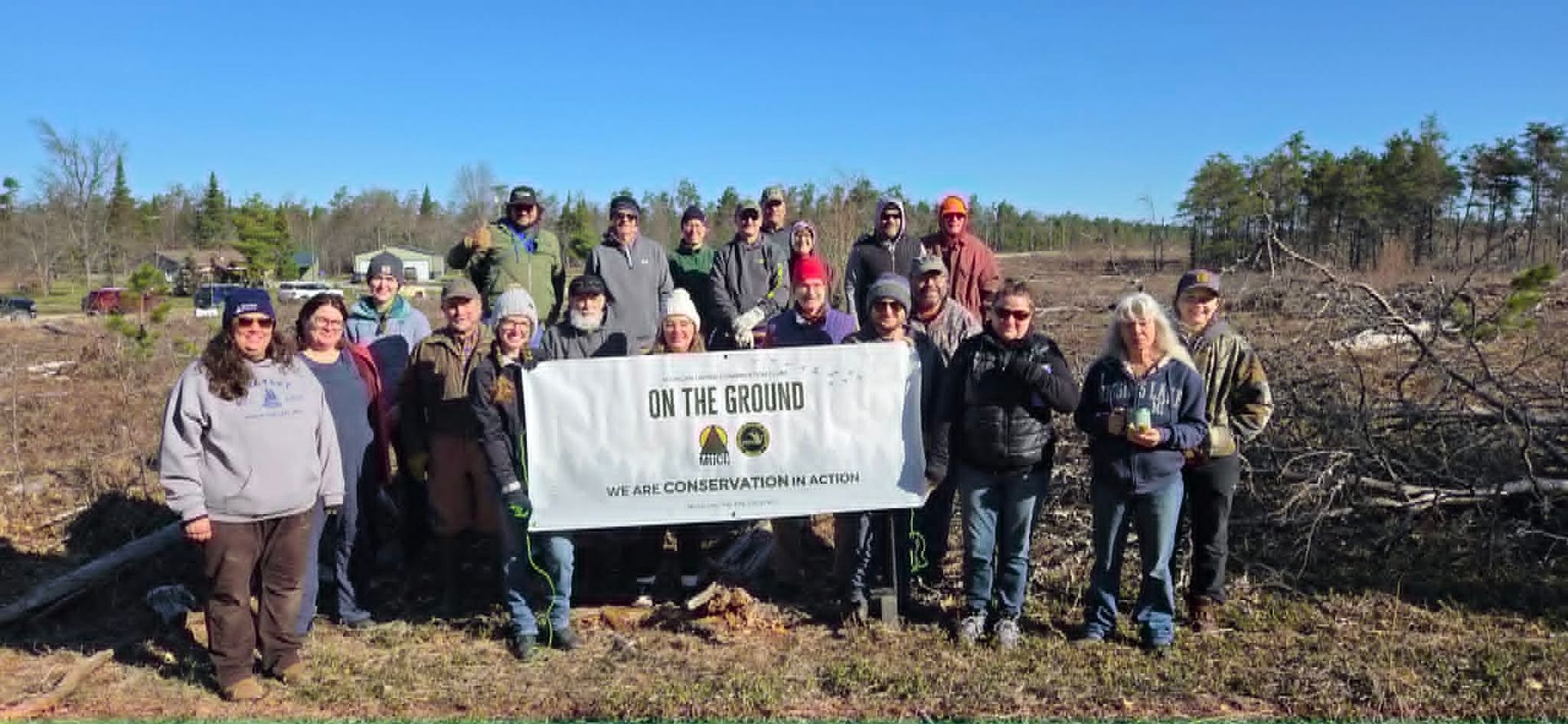
This year, the OTG program impacted 512 acres of public land and waters through 2,570 volunteer hours for the benefit of all public land users. Volunteers completed brush-pile building in multiple state game areas to benefit small game species like rabbit and ruffed grouse. They also performed an oak tree-release in the Pigeon River Country State Forest to open up the understory and give this mast-producing species the opportunity to grow and produce foraging material for species like wild turkey, wood duck, elk and white-tailed deer.
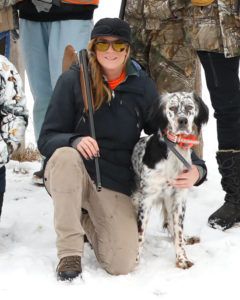
Heather Shaw, RGS Regional Wildlife Biologist for Michigan, Indiana and Ohio. Photo by Amy Stark .
In a variety of other state game areas and on public land throughout Michigan, OTG volunteers removed invasive species that were crowding out native vegetation and degrading wildlife habitat. Invasive flora like autumn olive, garlic mustard and honeysuckle were heavily targeted this field season due to their prevalence within many of the state game areas we visited. Additionally, volunteers planted a variety of native, mast-producing trees and shrubs for wildlife food and cover, improved hunter access trails, removed woody brush from dike edges to improve user access and water quality and aided in the restoration of grassland habitat for pheasants and pollinators. Heavily-used portions of the Clinton, Manistee and Red Cedar rivers were also cleaned to improve aquatic habitat and user access to these areas.
This was just a short synopsis of what the OTG program has accomplished during the 2019 season (you can read about the program’s total impact since its inception in 2013 HERE ). When looking at the 2,281 acres of public land improved in Michigan through the OTG program, it’s no wonder many volunteers return to project sites later to utilize them for the enhanced hunting, trapping and angling opportunities.
Interested in hunting or fishing in these improved areas? View our up-to-date project map HERE to see where OTG has been.
The post How OTG Benefits Sportsmen and Sportswomen appeared first on Michigan United Conservation Clubs.
Recent Posts