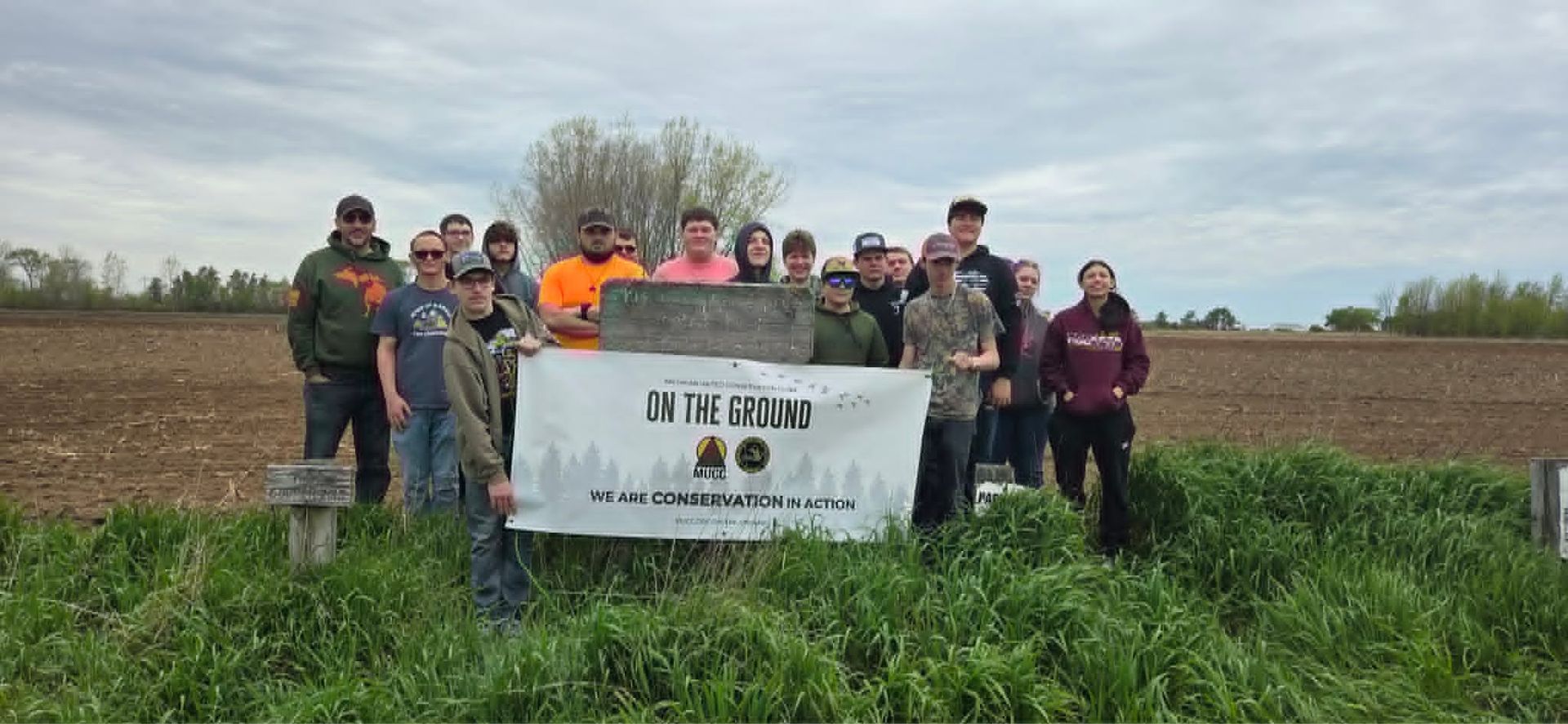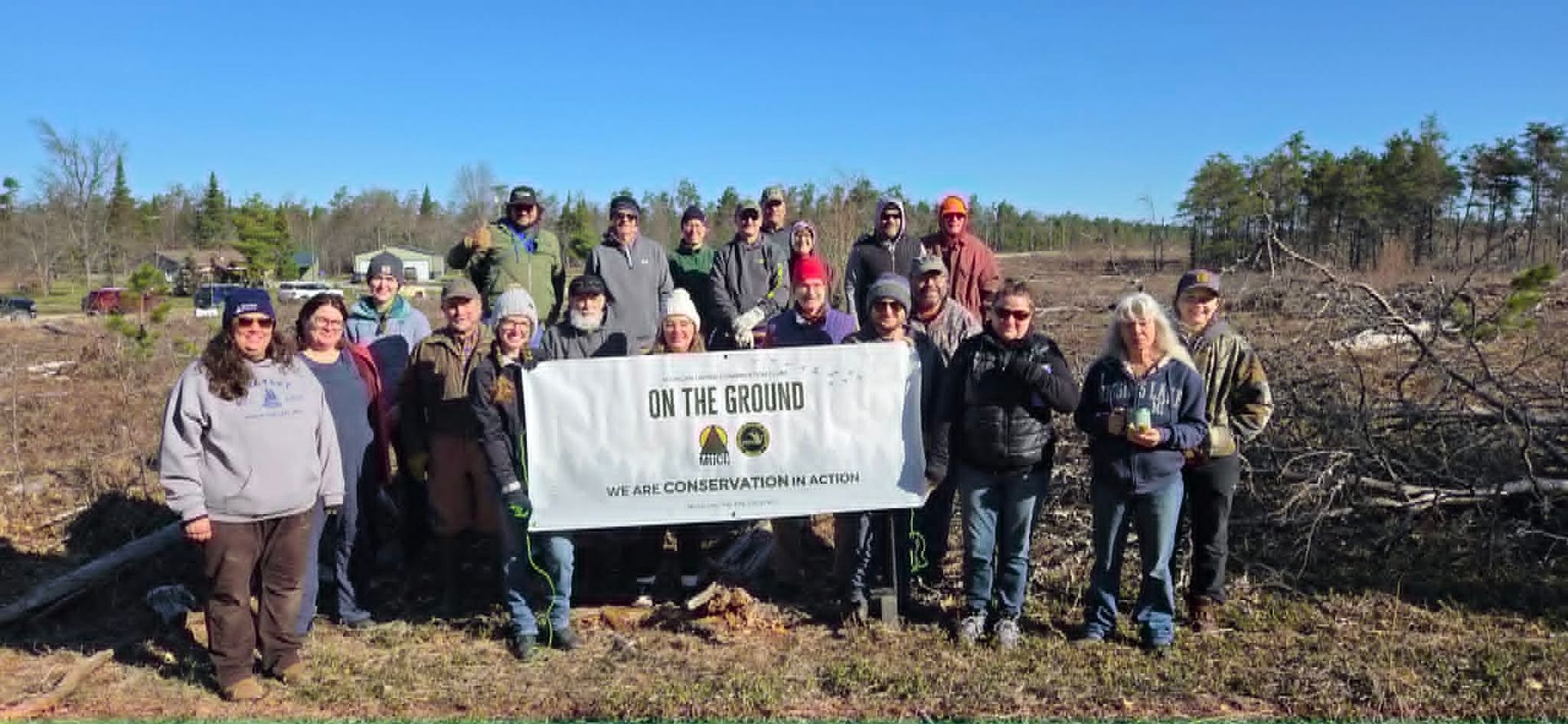
OTG Volunteers Plant Trees in the Escanaba River State Forest in Menominee County
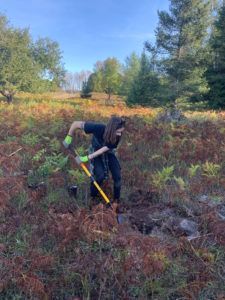
An OTG volunteer plants one of 80 trees in the Escanaba River State Forest near Daggett Township in Menominee County.
On Saturday, September 18, 2021, a group of 11 volunteers gathered in the Escanaba River State Forest in Menominee County of the Upper Peninsula to plant native trees and shrubs throughout a 9.5-acre parcel of public land.
Home to a larger habitat restoration effort by the Michigan DNR and the Menominee County Pheasant Club, the project site boasts beautiful landscapes and quality habitat for wildlife like ruffed grouse, wild turkey, and white-tailed deer. Ring-necked pheasants are also released annually for hunting purposes. The work completed by MUCC’s On the Ground program volunteers will further enhance the restoration efforts at this site.
Since there were two primary planting locations for the 80 native trees and shrubs, volunteers split into two groups to begin the process of getting the trees planted and fenced. The 80 trees were comprised of a mix of crabapple, hawthorn, and highbush cranberry species, all of which are native soft mast-producing species. As these species continue to mature and bear fruit, their benefits to wildlife will continue to grow as well. Species that will benefit from this tree planting range from songbirds and wild turkey to larger species like white-tailed deer and black bear.
Due to preparatory work completed by Michigan DNR Wildlife Division staff and MUCC staff the week leading up to the event, all of the large holes were augered and the trees and fencing materials were placed by each individual planting location. The only holes that needed to be dug by volunteers were for the smaller hawthorn trees, which were planted in groups of three.
Volunteers made quick work of the tree planting, often working in teams to plant and fence each tree or group of trees. Following the successful tree planting, volunteers regrouped in the parking lot for a lunch provided by MUCC. Each volunteer was given an OTG t-shirt or one of the new OTG coffee mugs as an appreciation gift for their volunteer efforts. The event concluded at 1 p.m.
This tree planting was made possible through a grant from the Caterpillar Foundation of Caterpillar, Inc. and a partnership with One Tree Planted. Part of a larger, global reforestation effort, this project was one of more than 90 similar tree plantings happening across the world. MUCC is a proud partner of this reforestation effort in Michigan, and you can learn more about Caterpillar’s work HERE .
To learn more about MUCC’s award-winning On the Ground volunteer wildlife habitat improvement program, please visit mucc.org/on-the-ground .
The post OTG Volunteers Plant Trees in the Escanaba River State Forest in Menominee County appeared first on Michigan United Conservation Clubs.
Recent Posts