Public Input Requested Regarding Future Management of Public Lands
 The Michigan Department of Natural Resources (DNR) is requesting public input regarding the development of their public land management strategy. Originally created in 2013, the public land strategy is used by the DNR to outline management plans for Michigan’s public lands and natural resources to ensure that Michiganders and visitors alike are able to recreate and enjoy public lands in their favorite ways. Michigan has nearly 4.6 million acres of public land that includes state parks, state game areas, forests and hiking and biking trails, among other components. This plan also assists the DNR is developing conservation strategies and measurable objectives that balance human use of public lands with the management required to keep our natural resources healthy.
Seven years into the original public land strategy, the DNR is taking the time to review progress made since the original strategy was created and begin planning for the future of public land management in Michigan. The DNR is requesting public input as they begin to draft the new land strategy and has developed a number of different opportunities for individuals to share their ideas and opinions.
Whether you enjoy public lands to hunt, fish, hike, mountain bike or bird watch, the DNR wants to hear from you about the value of Michigan’s public lands. Your input will not only give you the opportunity to share your opinion, but it will also be a key component of consideration by the DNR as they update the land strategy. Providing your perspective about future land management is a great way to ensure the ecological health of public lands is prioritized alongside the diverse ways Michiganders and visitors enjoy our iconic natural resources.
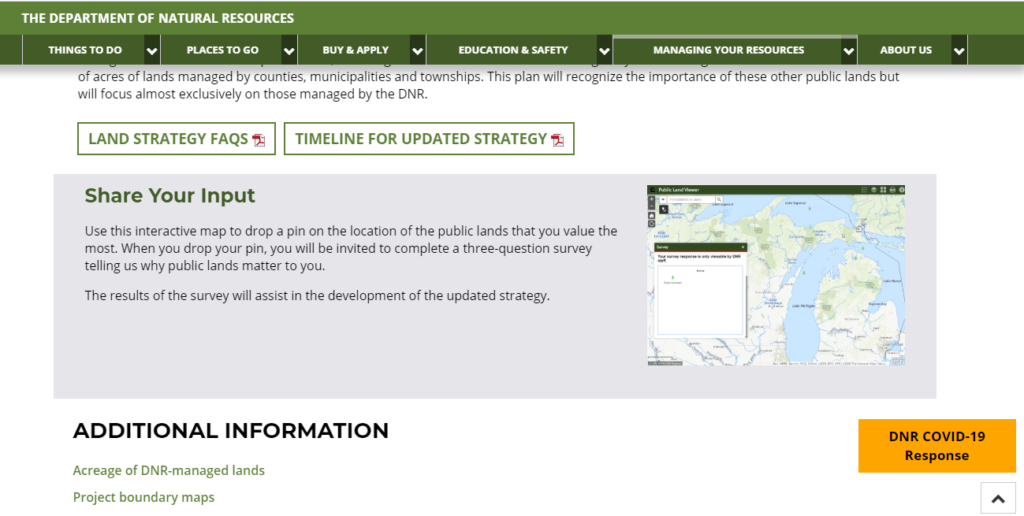
According to a DNR press release sent out on June 29, individuals interested in providing input to help create the future land management strategy can visit Michigan.gov/PublicLands and use the interactive map to drop a pin on the public lands that are most important to them. Following the pin placement, individuals will be prompted to complete a 3-question survey that allows them to explain why the area is important to them. The data and responses collected will be considered as the new land strategy is developed.
Email input regarding the new land strategy is also being accepted by the DNR at this time. Please email DNR-LandStrategy@Michigan.gov with your input as it pertains to the updated land management strategy. Additionally, please visit Michigan.gov/PublicLands to learn more about the land strategy and what it means for the future management of Michigan’s natural resources and public lands.
The post Public Input Requested Regarding Future Management of Public Lands appeared first on Michigan United Conservation Clubs.
Recent Posts