Wildlife Habitat Field Day
The Michigan Wildlife Cooperatives Program is joining forces with the Genesee Conservation District , Pheasants Forever, US Fish and Wildlife Service, USDA/NRCS, and the Michigan Agriculture Environmental Assurance Program(MAEAP) for a day in the field. This event is focused on all things wildlife habitat including grasslands, forest management, wetlands, cost-share programs and MAEAP.
Partners in conservation have large impacts on land and wildlife management. Working together brings together diverse expertise and showcases the kind of work that gets completed. The event location has a prime example of these partnerships with a pond/wetland ecosystem that was completed with US Fish and Wildlife Service.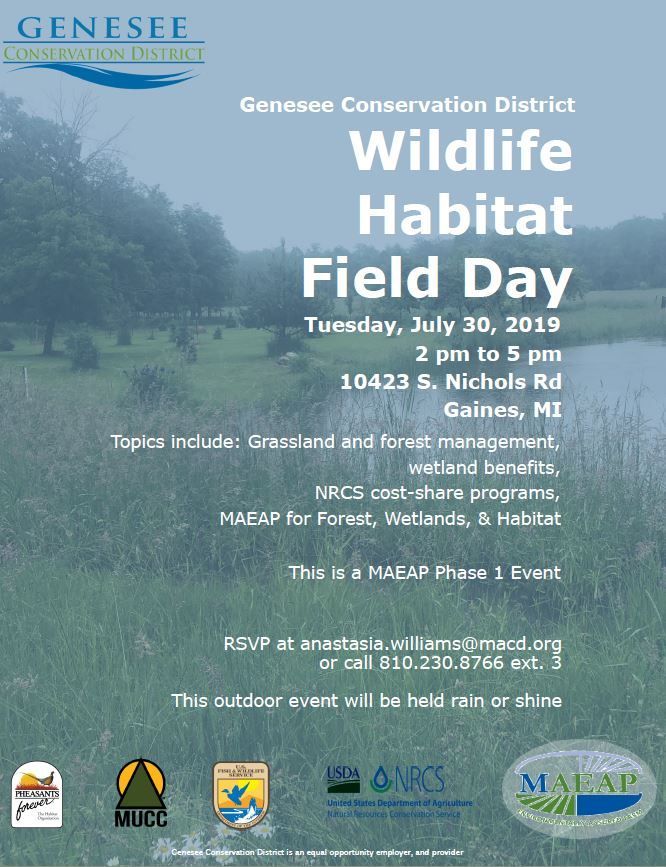
This one property also allows viewing of a small forested area and a grassland. Speakers that are experts in each will be stationed at each habitat site and will lead a discussion on establishing habitat and managing it correctly.
This field day is ideal for private landowners that are searching for property improvement ideas and might not know where to start. It will also be a great opportunity to interact with industry professionals that can help you on your conservation journey.
Please direct all questions and register by calling Anna at 810-230-8766 x 3 or by emailing anastasia.williams@macd.org. We hope to see you there!
The post Wildlife Habitat Field Day appeared first on Michigan United Conservation Clubs.
Recent Posts