On the Ground: 151 Projects and Counting
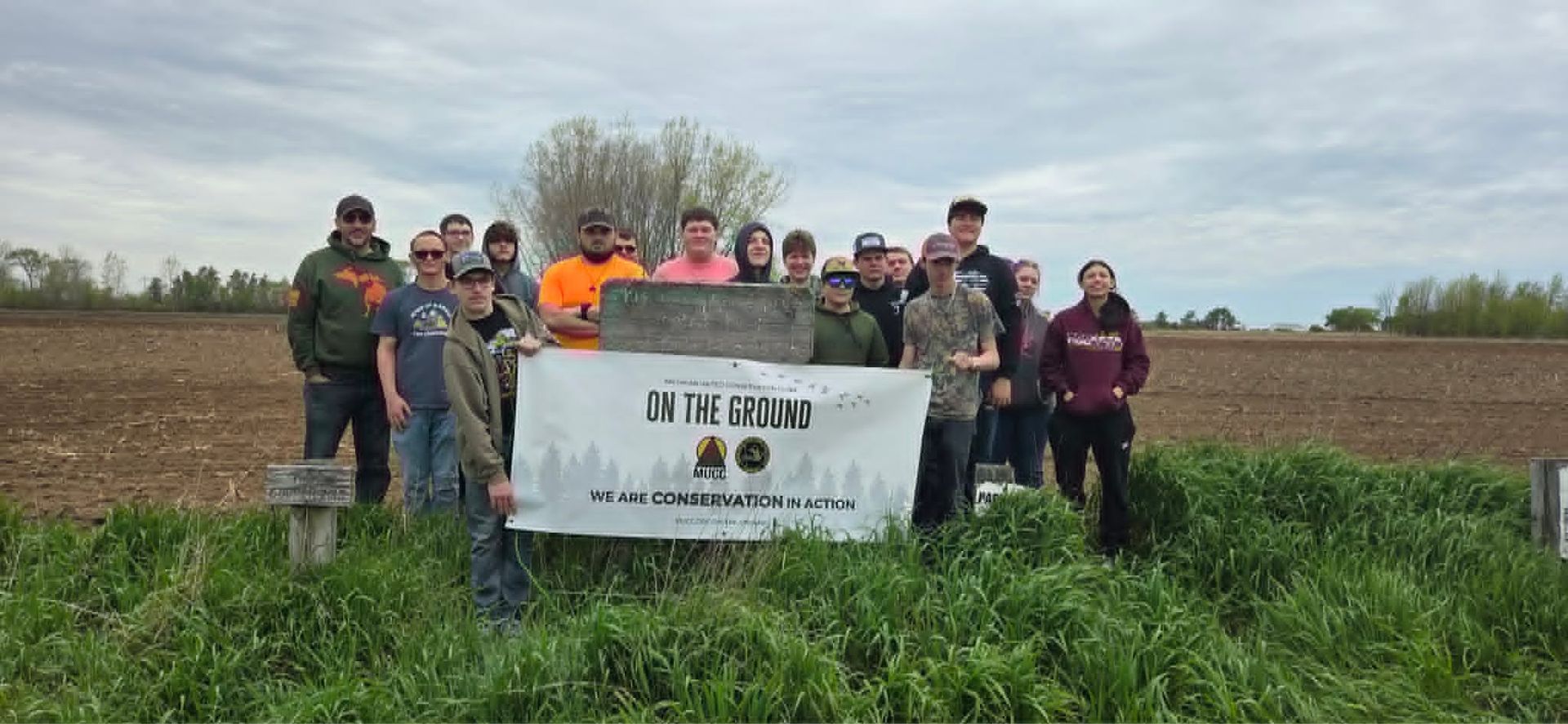
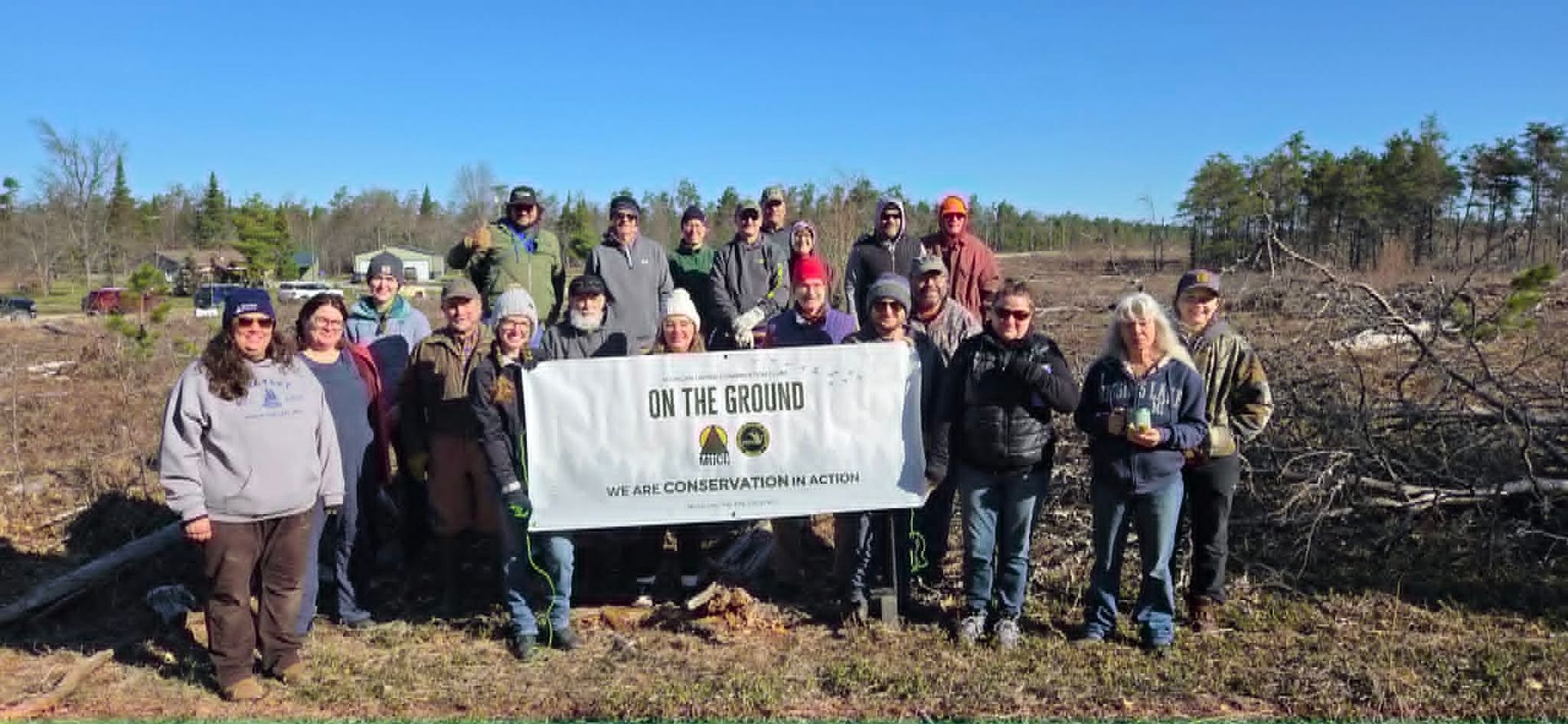
 MUCC’s On the Ground (OTG) program has completed more than 150 projects on state land across Michigan since its inception nearly eight years ago.
In that time period, more than 3,000 volunteers have improved wildlife habitat through weekend projects in state game areas and forests that involve building brush piles, removing invasive trees, restoring grassland habitat through native flower and grass plantings, installing fish spawning structures, hinge-cutting trees for deer and snowshoe hare, installing wood duck boxes, regenerating aspen stands, performing river clean-ups and planting a variety of trees for wildlife food and cover.
Many people ask about where these projects have taken place, and our team has put together an interactive map that shows each project location, type and date. You can access the map by visiting mucc.org/on-the-ground and scrolling down the page. Tree plantings are indicated using a green tree icon, invasive species removals with a purple flower icon, hunter access trail maintenance with a light blue hiking icon, river clean-ups and aquatic habitat improvement with a dark blue fish icon and chainsaw safety training with a black wrench icon. By clicking on any of the icons, a more detailed description of the project is provided.
Not only does this map serve as a way to illustrate the impressive scope of our program, but it also provides past volunteers or local outdoor enthusiasts with insight into the state game areas and state forests that have benefited from specific wildlife habitat enhancement projects. This can provide optimal opportunities to explore new hunting or wildlife-viewing locations on public land throughout Michigan.
Do you have any public land in mind for OTG projects? Please email MUCC Habitat Volunteer Coordinator Makhayla LaButte at mlabutte@mucc.org with your ideas and recommendations. We are also on the lookout for project partners to complete habitat work on public land. If you are a part of a conservation organization, company or club and want to partner with MUCC’s OTG program to enhance wildlife habitat in Michigan, please contact us. We are always looking to grow this award-winning program.
The post On the Ground: 151 Projects and Counting appeared first on Michigan United Conservation Clubs.
Recent Posts