On the Ground in Clare County
OTG volunteers finishing up one of the brush piles built for small game on March 7, 2020 in Clare County.
On Saturday, March 7, 2020, 14 volunteers helped improve small game habitat in part of the Gladwin Forest Management Unit located in Clare County. Department of Natural Resources Wildlife Division (DNR) and MUCC staff introduced the project site and how the DNR has been managing the area to benefit a variety of game species. The event location is known to boast quality habitat for ruffed grouse, woodcock, cottontail rabbit and many other game and nongame species. To enhance habitat for small game in the area, volunteers spent the morning bucking and limbing felled trees and building brush piles with the materials.
Brush piles are a critical component of quality small game habitat, and volunteers with the OTG program have contributed countless weekend hours across the Lower Peninsula building what we call “rabbitat” (rabbit habitat). Despite the name, these brush piles also benefit other small game like ruffed grouse and squirrels while benefiting an abundance of nongame species as well. These brush piles can provide immediate shelter from predators or inclement weather, and serve as a location for nests and dens.
Volunteers met at the project site located off South Rogers Ave. at 9 a.m. After highlighting the brush piles that were built in one area of the site last July 2019 and the species that have already utilized them, the volunteers split into two groups. One group remained with the original brush piles from last summer to reinforce them by adding more limbs to the base of the pile, and the other group moved on to a different site location to begin building five new brush piles. Volunteers that had sawyer experience began the project by bucking and limbing trees that had been felled for the project, and the rest of the volunteers teamed up to lift and move these heavy materials to build the new brush piles.
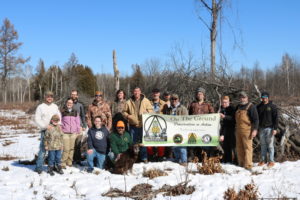
Volunteers gather for a photo in front of one of the brush piles built during the OTG project on Saturday, March 7, 2020.
Following the successful completion of the five new brush piles, volunteers met back at the entrance to the project site for lunch. Volunteers learned more about the DNR’s management of the area, the OTG program and upcoming spring projects and the Huron Pines AmeriCorps program.
Thank you to everyone that volunteered for wildlife this past weekend and our project partner, the North Central Michigan Chapter of the Ruffed Grouse Society. If you’re interested in learning more or getting involved with the OTG program, visit mucc.org/on-the-ground.
The post On the Ground in Clare County appeared first on Michigan United Conservation Clubs.
Recent Posts