Working for Waterfowl
Written by HuronPines AmeriCorps Member Joe Dewan
I was interested in doing a term of AmeriCorps service because I wanted to gain experience doing hands-on conservation work. So far I have very much enjoyed my time with MUCC as I have received many opportunities to interact with conservation professionals and learn from them. On my very first day, for example, Morgan Jennings and Makhayla LaButte of the MUCC field team taught me how to properly age a deer by using the jawbone. Ever since that first day I have been politely and repeatedly asked by my friends and family to stop changing the topic of discussion to how to properly age deer jawbones.
It was not long after that when MUCC Education Director Shaun Mckeon and Makhayla asked me how much I knew about waterfowl identification, as waterfowl ID is one of the major education pieces that MUCC uses to teach folks about Michigan’s wildlife. With the answer being, I knew almost nothing about waterfowl, I started to learn as much as I could about ducks. I learned from studying MUCC’s Duck ID guide but I also relied on online resources from the United States Fish and Wildlife Service(USFWS) and Ducks Unlimited.
If I had to pick a favorite duck from my studies it would have to be the Northern Shoveler. I think that the drake with its large black spoon-shaped bill and iridescent green crown is quite visually striking. A fun fact about Northern Shovelers is that according to the USFWS they are not highly regarded as table birds because ⅓ of their diet is animal matter.
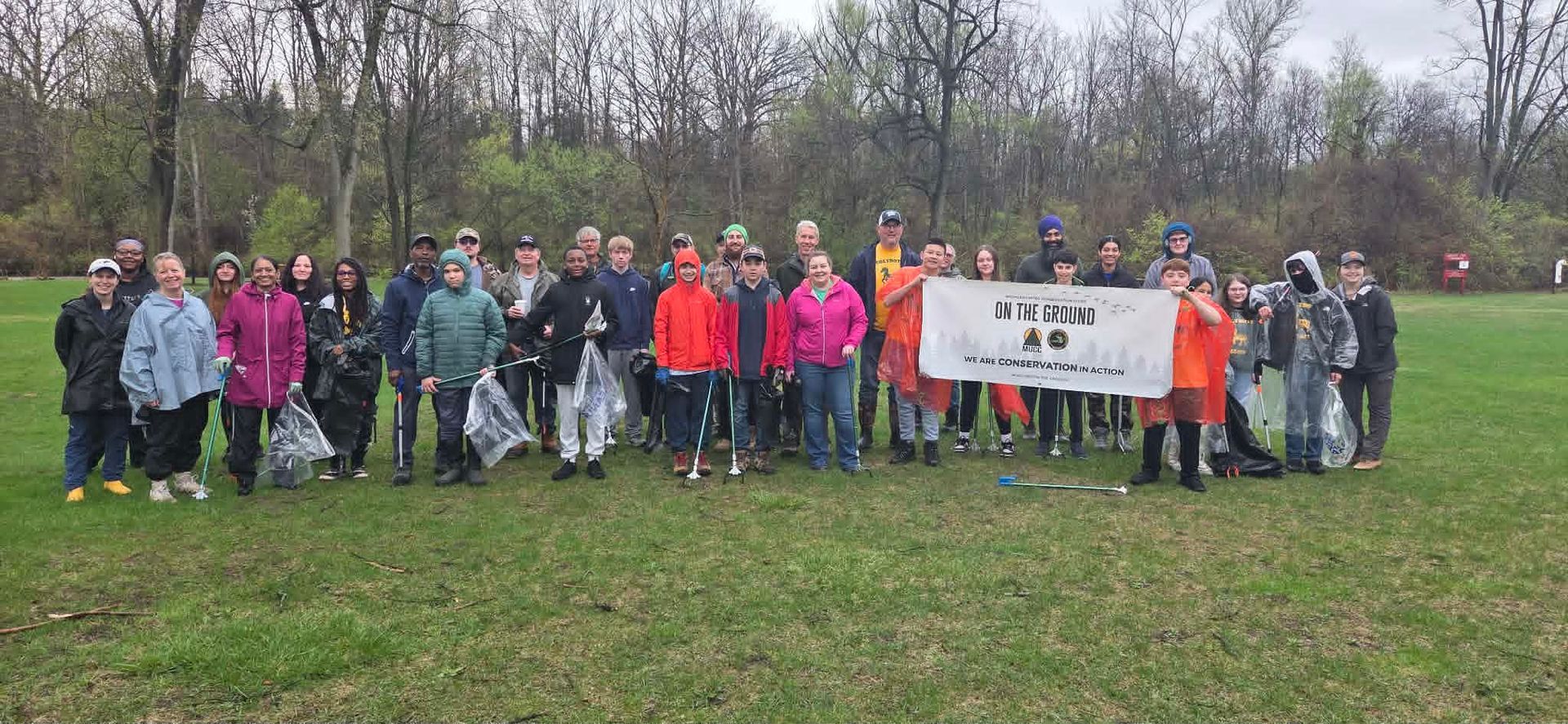
All of my studying has been in part to prepare for a quiz with Shaun and all of his duck decoys next week. Not only will this knowledge help me with our education events, but it is also fitting because of our upcoming On the Ground(OTG) and On the Water(OTW) events. The next three Saturdays MUCC is conducting field projects that focus on improving waterfowl habitat on public lands. These events are great educational opportunities. They include a free lunch and are fun for the whole family.
On Saturday, February 22nd, there will be an OTG event at the Maple River State Game Area (SGA) to remove woody brush from dikes and check wood duck nesting boxes. To register to volunteer click here.
On Saturday, February 29th, There is an OTG event at the Shiawassee River SGA in which we will be doing dike maintenance and checking wood duck boxes (Ice permitting, there is a back-up project in place). To register to volunteer click here.
On Saturday, March 7th there is an OTW event at Burchfield Park in Holt in which we will be building wood duck boxes. To register to volunteer click here.
The post Working for Waterfowl appeared first on Michigan United Conservation Clubs.
Recent Posts