On the Ground: 2021 Year In Review
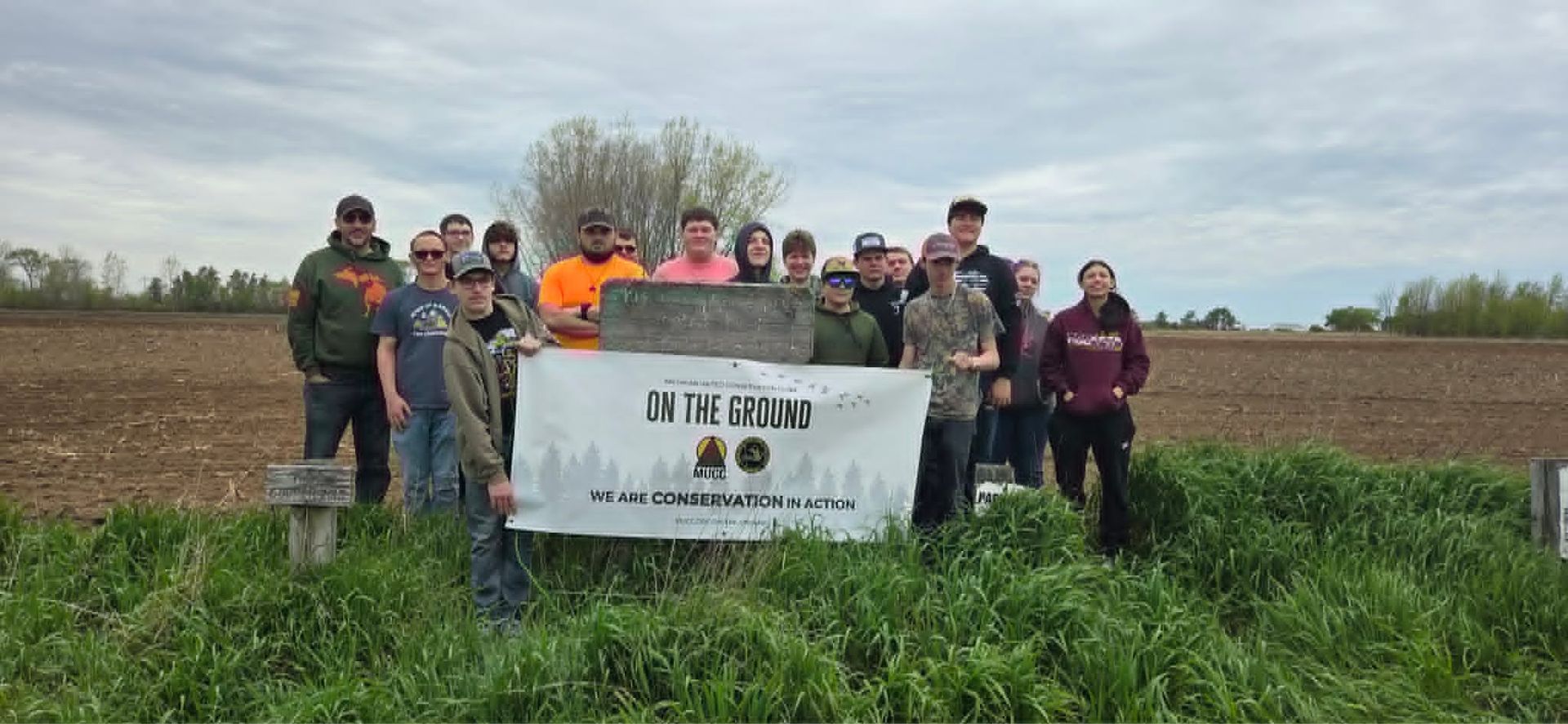
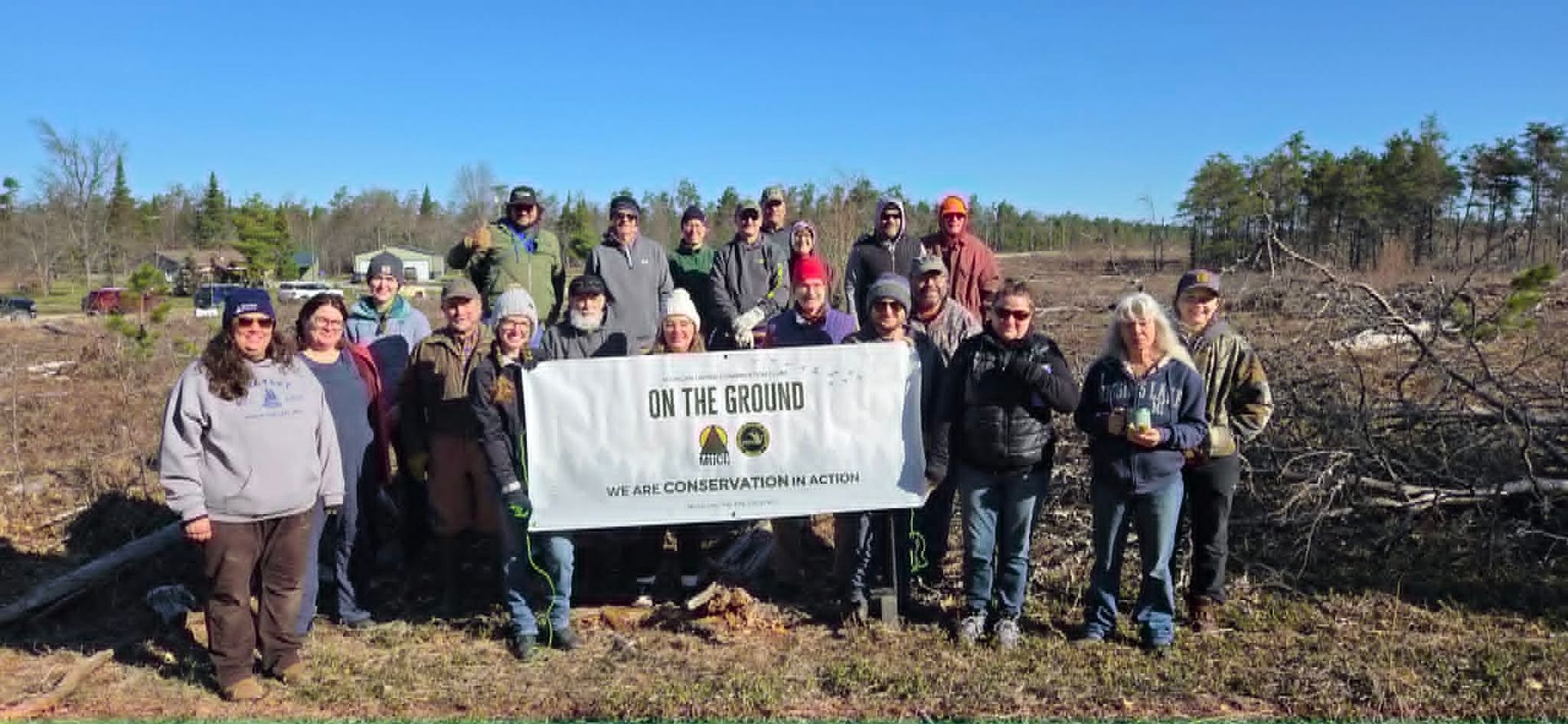
 Despite limitations early in the 2021 field season due to continued COVID-19 restrictions, the On the Ground (OTG) program was still able to improve habitat across the state of Michigan during the 2021 fiscal year (October 2020 through September 2021). While a typical field season includes approximately 20-25 habitat projects, the OTG program hosted 11 projects in 2021. During these events, more than 200 volunteers impacted 141 acres of wildlife habitat through 821 volunteer hours. Volunteers joined us across the Lower Peninsula and in the Upper Peninsula to build rabbitat, plant native trees and wildflowers, and remove invasive flora. We would like to thank all of the volunteers that joined us at these events across Michigan.
Currently, the OTG program is entering its annual fall and winter pause to begin designing the volunteer event calendar of 2022. To learn more about the award-winning OTG program and to view updates about events, please visit mucc.org/on-the-ground or contact MUCC Habitat Volunteer Coordinator Makhayla LaButte at mlabutte@mucc.org .
Below is a summary of the 11 projects completed over the course of the 2020 fiscal year. To read the blog associated with each event, please click the event title.
October 4, 2020 – Fulton State Game Area
OTG returned to the field to kick off the planting of 2,500 native trees at the Fulton State Game Area. These trees were funded by the Consumers Energy Foundation and will enhance habitat for diverse wildlife. Originally designed to be a volunteer event for Consumers Energy staff during Earth Day this past April, restrictions due to COVID-19 prevented the original volunteers from attending the event and it was postponed until October. Since COVID-19 restrictions remained in place, it was determined that the event would make a great day for the MUCC field team to get outdoors and kick-start the planting of the trees.
October 10, 2020 – Petersburg State Game Area
OTG partnered with The Nature Conservancy at the Petersburg State Game Area to plant the native wildflower blazing star. A total of 450 blazing star plants were planted in two oak openings within the SGA by 18 volunteers. Valuable to naturalists and hunters alike, the Petersburg State Game Area is home to diverse wildlife. From rare insects like the blazing star borer moth and Karner blue butterfly to the abundant white-tailed deer and wild turkey, this area has benefited greatly from habitat restoration efforts by many conservation organizations.
October 24, 2020 – Kalkaska
A total of 22 volunteers gathered in Kalkaska to plant, mulch and fence 90 mature soft mast-producing trees to enhance habitat for wildlife in Kalkaska. These fruit trees were planted throughout five different openings within the state forest along Sunset Trail Road and will benefit a variety of wildlife that include ruffed grouse, wild turkey, white-tailed deer, songbirds and an abundance of other game and non-game species.
March 13, 2021 – Clare County
The OTG program returned to Clare County to build brush piles (“rabbitat”) on public land near Harrison. A group of nine volunteers met at the project site to limb and buck trees that were then used to assemble five new brush piles. These brush piles will be utilized by wildlife that ranges from rabbit/hare and ruffed grouse to songbirds and reptiles. The event location is known to boast quality habitat for ruffed grouse, woodcock, cottontail rabbit and many other game and nongame species.
March 27, 2021 – Kalkaska
The OTG program also returned to Kalkaska to build brush piles (“rabbitat”) on public land. A total of 18 volunteers constructed more than 40 brush piles within openings along Johnson Lake Road that will be utilized by wildlife throughout the area. These openings are surrounded by young aspen stands and also contain mature oak trees throughout. In addition to building brush piles, volunteers also prepared these openings to be managed as grassland habitat in the future.
April 24, 2021 – Minden City State Game Area
OTG partnered with the Robert J. Lytle Chapter of the Ruffed Grouse Society to plant 200 red and bur oak saplings within the Minden City State Game Area. A group of 56 volunteers gathered to plant and tube these oak trees, which will benefit a wide variety of wildlife that include ruffed grouse, wild turkey and white-tailed deer. This event engaged volunteers of all ages, and there was great representation from local conservation organizations like the Ruffed Grouse Society, Harbor Beach Conservation Club and many others.
May 12, 2021 – Lake Interstate State Game Area
A group of 24 students from Eaton Regional Education Service Agency (RESA) volunteered for wildlife at Lake Interstate State Game Area with our On the Ground Junior (OTG Jr.) program. Students planted 500 sargent crabapple seedlings, picked up trash throughout the state game area and helped improve user access by pruning encroaching vegetation along the trails. The work completed on this piece of public land during this habitat event will benefit wildlife and recreationists alike.
May 15, 2021 – Chainsaw Safety Training at Rose Lake State Game Area
Seven Huron Pines AmeriCorps members serving across Michigan gathered at Rose Lake State Game Area to learn how to be safe sawyers. Attendees learned the basics of chainsaw safety, practiced bucking and limbing downed trees, observed a demonstration on tree felling techniques and also learned how to sharpen and disassemble the saw for cleaning. The trees felled and used for training were invasive black locust trees, which are known to outcompete native flora and displace wildlife that relies on them.
August 7, 2021 – Clinton River Clean-Up
A group of 25 volunteers joined MUCC, Metro-West Steelheaders and the Clinton River Watershed Council at the annual Clinton River Clean-Up event at Yates Park in Rochester Hills. More than 450 lbs. of trash was removed from within and around the Clinton River during this clean-up event. Volunteers followed the river throughout Yates Park, covering popular walking trails, the river bank and within the river itself. Items like traffic cones, tires, plastic containers, shelving units and countless other forms of trash were pulled from the river and its banks.
September 11, 2021 – Prairie Restoration at Pierce Cedar Creek Institute
A group of 15 volunteers met at Meadow Lodge on Pierce Cedar Creek Institute property to begin the first phase of a prairie restoration effort in the surrounding fields. Volunteers used loppers and handsaws to remove woody vegetation such as autumn olive and multiflora rose before the remaining stalks and stumps were treated with herbicide to prevent regeneration. This was the first of many projects to restore the fields to shortgrass prairie habitat.
September 18, 2021 – Tree Planting in the Escanaba River State Forest
11 volunteers joined MUCC as we planted and fenced 80 mast-producing trees and shrubs on public land in Menominee County. These mast-producing trees and shrubs included a mix of crabapple, highbush cranberry, and hawthorn and will provide foraging material and additional habitat for wildlife like white-tailed deer, ruffed grouse, American woodcock, wild turkey, and songbirds. This tree planting was made possible through a grant from the Caterpillar Foundation.
The post On the Ground: 2021 Year In Review appeared first on Michigan United Conservation Clubs.
Recent Posts