Public Lands Blog: State Parks
I can remember vividly my first visit to a State park, as I imagine many MUCC members and readers can. I remember the excitement pulling up to the campsite, my delight in playing and swimming in the lake with my brother and sister and my futile efforts to start a campfire by rubbing two sticks together. It is a true joy to live here in Michigan, where no matter where you are in the state, you are never further than an hour away from a state park.
This week’s entry in the Public Land Blog Series is all about land managed by the Parks and Recreation Division (PRD) of the Michigan Department of Natural Resources(MDNR). The PRD mission statement is “to acquire, protect, and preserve the natural and cultural features of Michigan’s unique resources, and to provide access to land-and water-based public recreation and educational opportunities.”
The PRD’s current strategic plan details how they are meeting their mission. Currently, the system includes 103 state parks, recreation areas, scenic sites, and historic state parks and hosts 25 million visitors annually. There are 306,148 acres of recreational land, out of which 257,155 acres of land that are open to hunting. The PRD also manages 13,496 campsites as well as 140 state forest campgrounds that total 4,058 rustic campsites.
The PRD is also responsible for managing the boat launches and trails of the state. According to the strategic plan, the PRD manages ”19 state harbors on the Great Lakes and connecting waterways, 64 local community harbors developed with the assistance of DNR grant funding, 13 Harbors of Refuge, 6,351 boat slips at both state and local harbors, and 1,100 developed public boating access sites.” The PRD operates a trail system with ”More than 12,500 miles of trails, over 2,700 miles of Rail Trails connecting communities, over 3,600 miles of designated ORV trails and 6,000 miles of designated snowmobile trails, over 1,300 miles of equestrian trails, 1,400 miles of biking trails, and 4,000 miles of hiking/cross-country ski trails.”
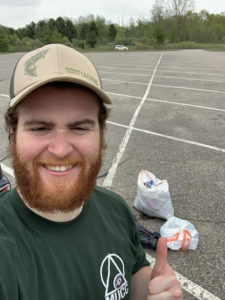
On May 24th, I visited Sleepy Hollow State Park to clean up trash as a part of my AmeriCorps service term.
State Parks in Michigan are in part funded by the sale of Recreation Passports. The money from the sale of Recreation Passports goes back to help maintain and preserve the State Parks and to learn more about how you can purchase a passport and access Michigan’s State Parks follow this link .
I am looking very much forward to my next visit to a state park but it is important to note that currently several facilities and amenities have been closed in the efforts to curb the spread of COVID-19. Currently, State Parks, Trails, boat launches, and other public lands remain open but it is best to review all the proper guidance before you plan your next trip.
Next week’s Public Lands blog will be published on Wednesday, June 10th about the roughly 3.8 million acres of Michigan’s State Forests. Until then, I hope all who read this can get outside to responsibly recreate on Michigan’s public lands.
The post Public Lands Blog: State Parks appeared first on Michigan United Conservation Clubs.
Recent Posts